Comanche Crossing: Flying the North Atlantic to Canada, Part Two

By Taz Mattar | MSFS 2024 | Piper Comanche 250 | IFR
Part One covered Legs 1–4: Blackbushe to Kulusuk via Prestwick, the Faroe Islands, and Reykjavik. N6229P is parked on a snow-covered ramp in East Greenland. This is where the story continues.
Leg 5: Kulusuk → Nuuk
BGKK → BGGH | 3 May 2026
| Route | DCT DA Y47 BAMAM DCT BGGH |
| Cruise | FL120, 75% power |
| Distance | 382 nm (GC: 379 nm) |
| Air Distance | 497 nm |
| Block Time | 3h 56m |
| Block Fuel | 192 lbs |
| Avg Wind | 279°/35 kts, strong westerly headwind |
| Wind Component | M033, meaningful headwind all the way |
| Alternate | BGSF (Kangerlussuaq) |
| MORA | 11,100 ft at NAPIB |
| Departure Wx | 28001KT 9999 BKN210 01/M09 Q1017 |
| Destination Wx | 19016KT 9999 FEW012 BKN032 OVC040 02/00 Q1022 |
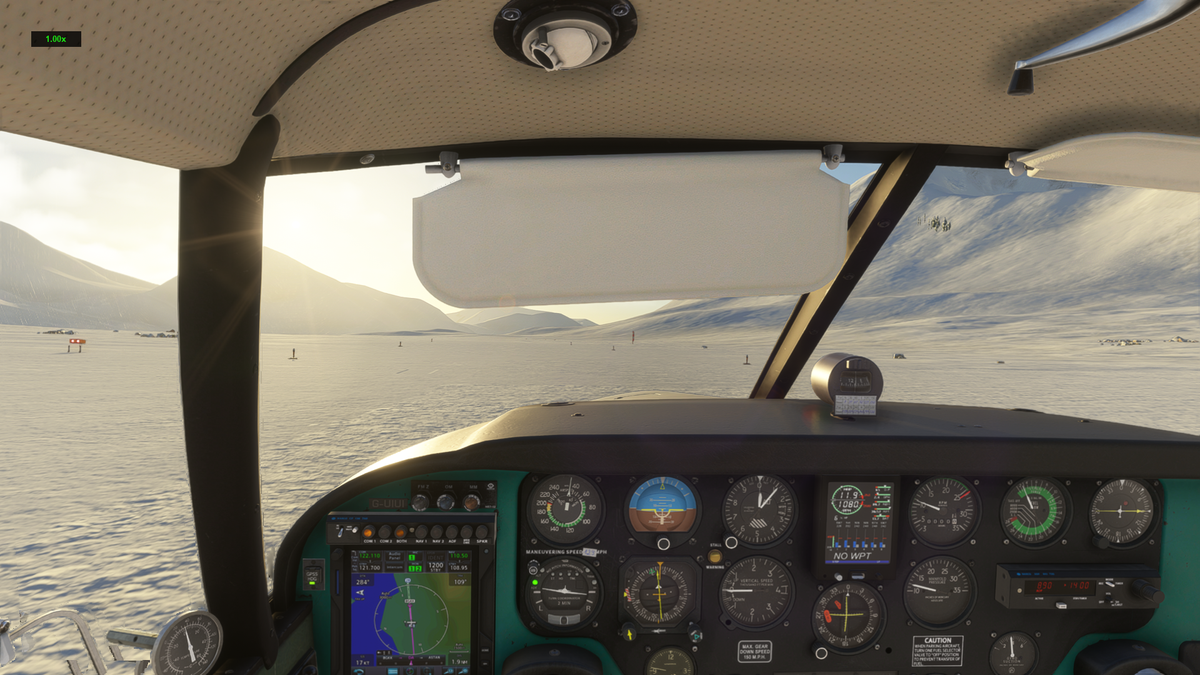
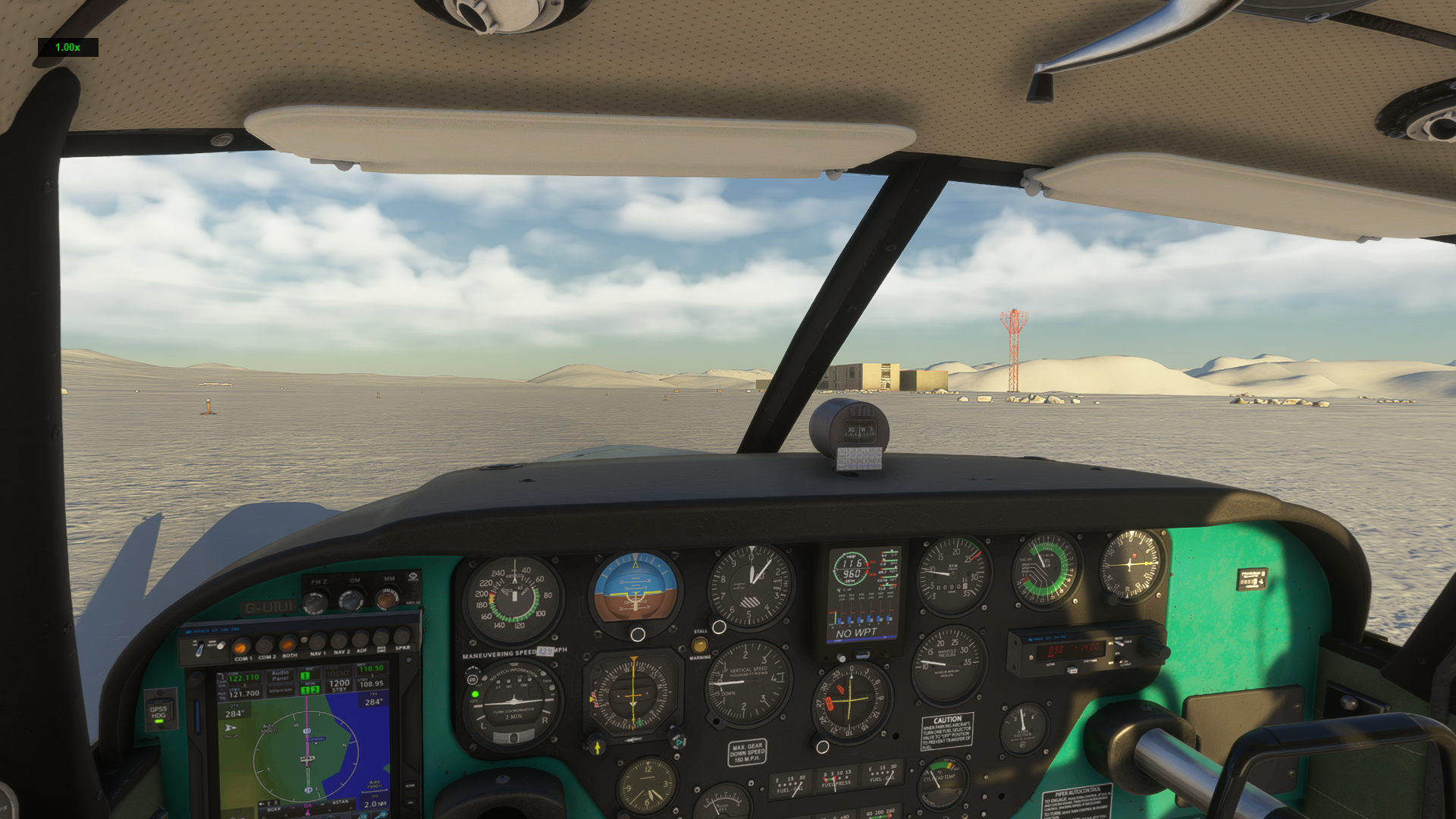
The blizzard had passed. Kulusuk in the morning light was a completely different place.
The departure METAR told the story: 28001KT, essentially calm winds, broken cloud at 21,000 feet, visibility unlimited. Temperature 1°C, dew point minus 9. Dry, cold, and clear. The ramp that had been a whiteout the day before was now bathed in low Arctic sunshine, the mountains rising behind the airport in crisp, brutal relief.
.png)
The route down to Nuuk via waypoint DA and the Y47 airway is deceptively short on paper: 382 nautical miles ground distance. What the SimBrief OFP was less casual about was the air distance: 497 nautical miles. The difference comes from a 35-knot westerly sitting directly on the nose, giving a M033 wind component. At 161 knots TAS that's nearly a third of the airspeed absorbed by headwind. The Comanche would be grinding west at little more than 128 knots over the ground for most of this leg.
The cruise altitude stepped up to FL120 for this leg, significantly higher than anything in Part 1. The reason is in the MORA: 11,100 feet at the NAPIB waypoint. The terrain between Kulusuk and Nuuk is serious, the coastal mountains of East Greenland giving way to the ice cap before descending toward the fjords of the west coast. FL120 keeps you clear with just enough margin to feel uncomfortable if you think about it.
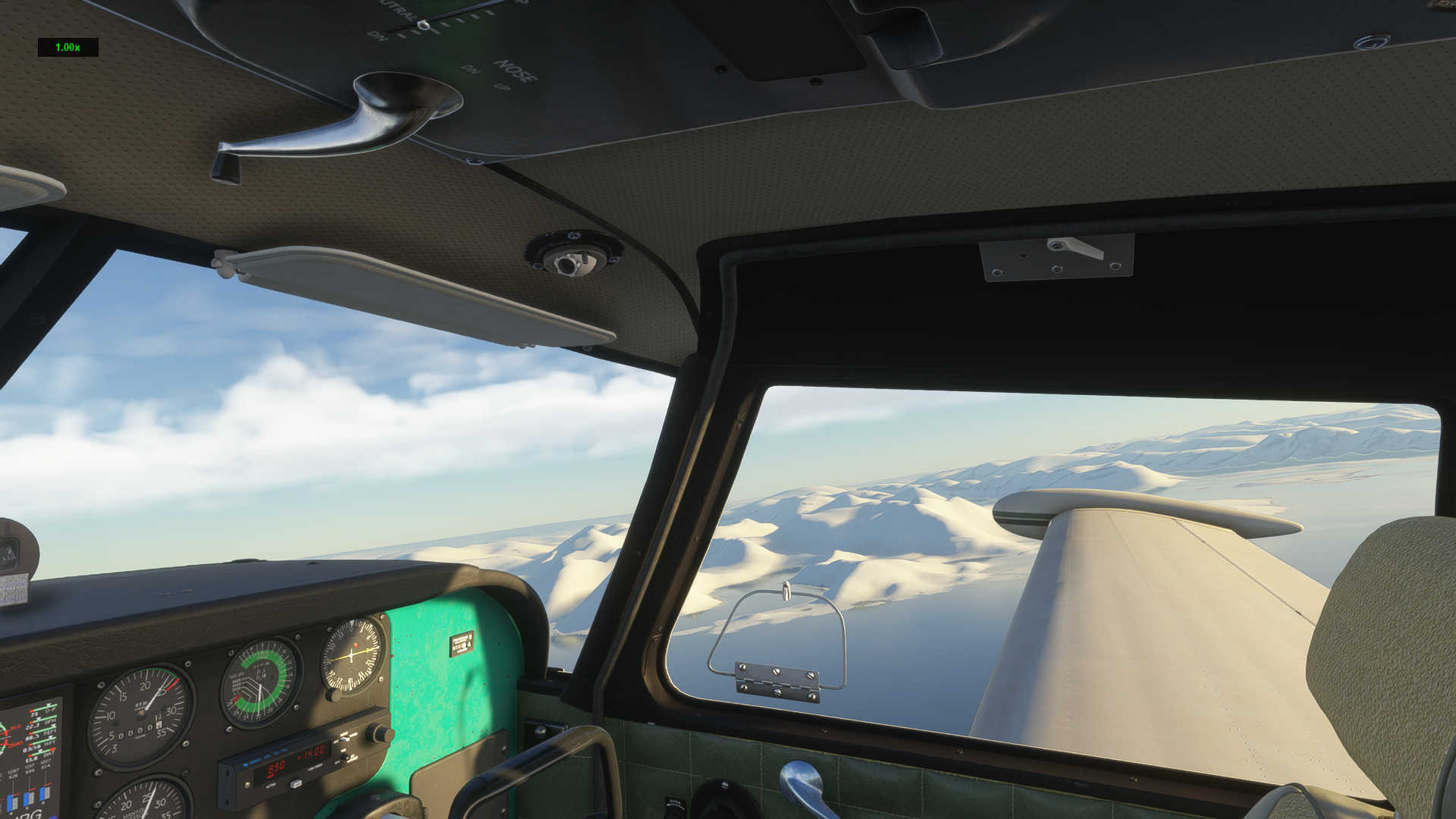
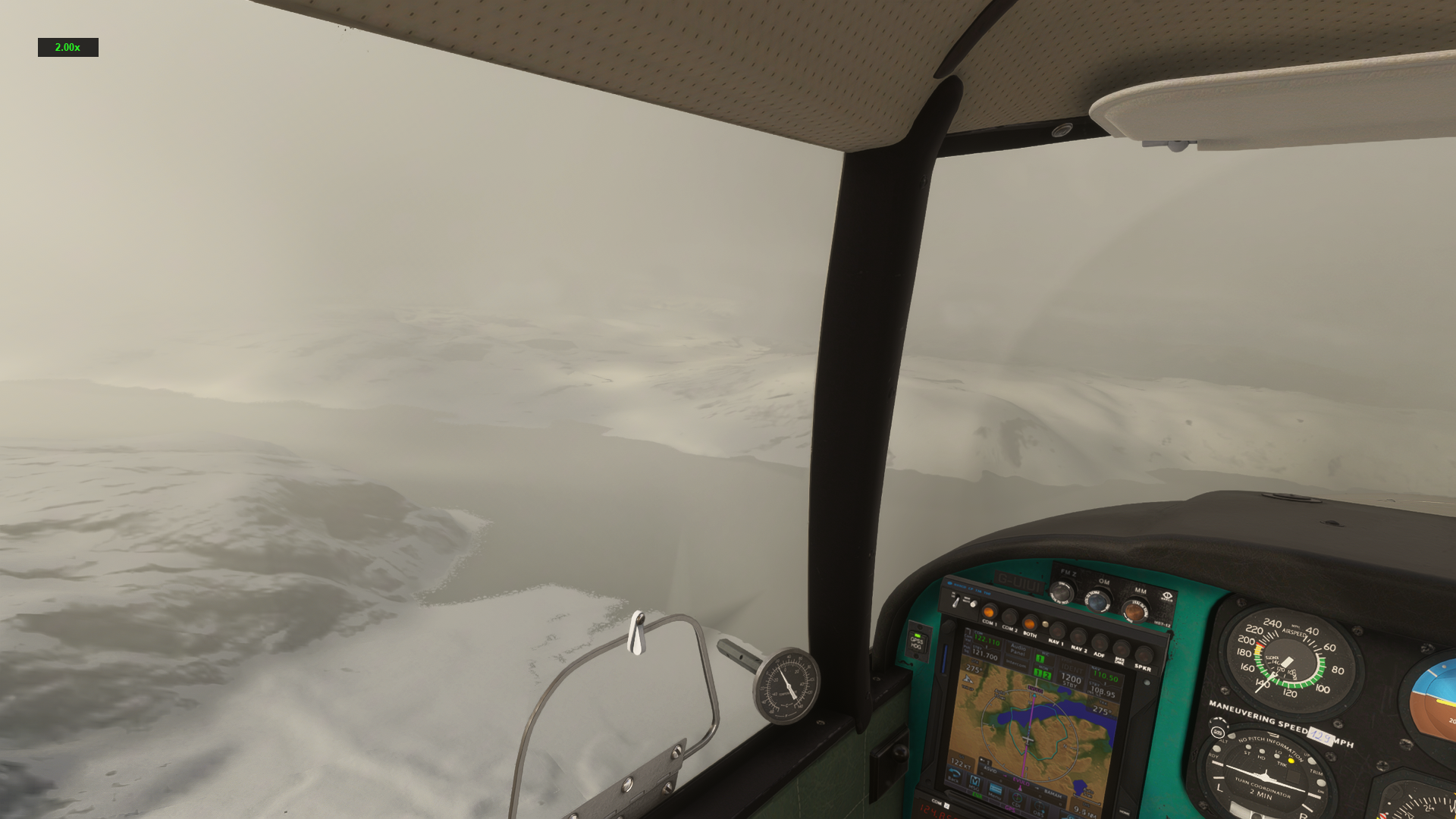
Climbing out of Kulusuk, the ice cap appeared almost immediately below. It is one of the most alien landscapes visible from a light aircraft anywhere on earth, an unbroken white sheet stretching to every horizon, carrying in places almost three kilometres of ice pressed down onto the rock below. No features, no shadows, no scale. Just white.
.png)
The headwind made itself known quickly. The groundspeed readout on the GNS was not a cheerful sight. The flight planned block time was 3h 56m and that number felt earned by the time cruise was established. The Lycoming was pulling hard at 75% and the Comanche wasn't going anywhere fast relative to what was below.
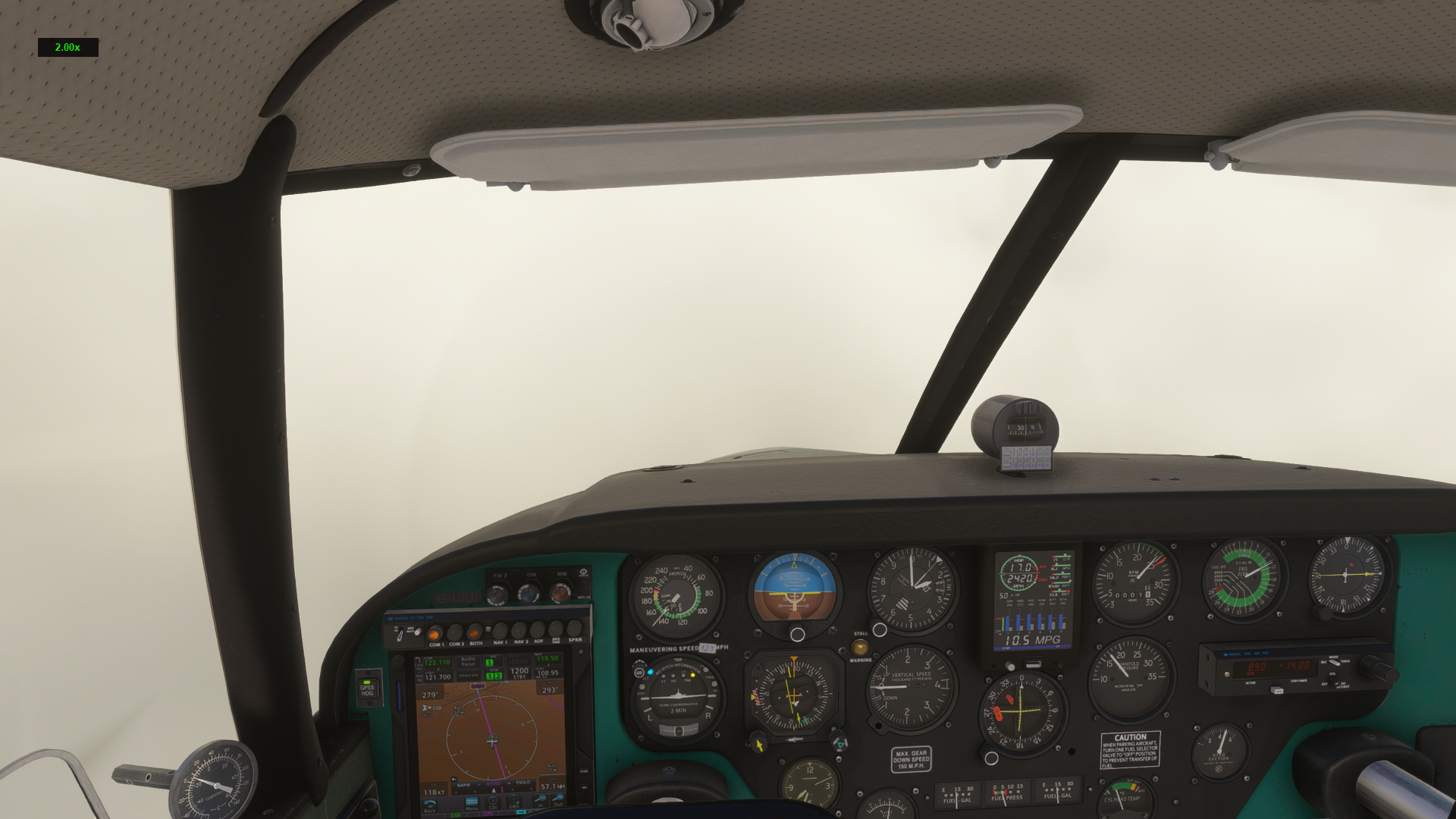
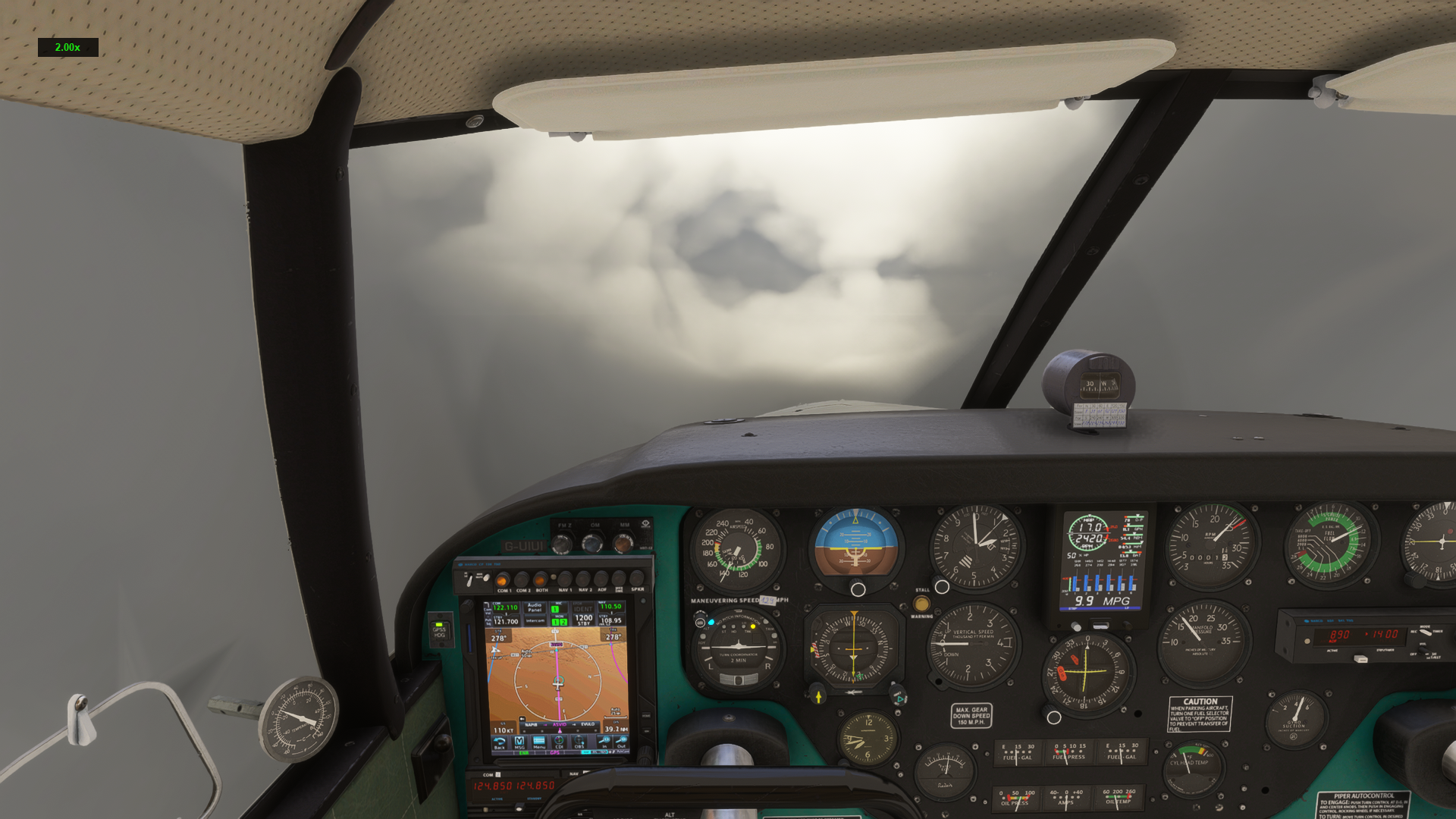
Conditions deteriorated through the cruise. Cloud built ahead and the Comanche went IMC, grinding westward through grey murk with the ice cap somewhere beneath.
.png)
Then the engine started complaining.
Somewhere around the halfway point, buried in cloud at FL120 over the Greenland ice cap with a 35-knot headwind and the nearest alternate a long way behind me, I noticed the power dropping off. The manifold pressure had sagged to 19 inHg. At FL120 on a wide-open throttle that is not a power setting, that's a symptom. A glance at the carburettor air temperature gauge confirmed it: -18°C. The venturi effect through the carburettor throat drops the air temperature a further 20°C or more on top of whatever the CAT reads, which put the actual mixture temperature somewhere below -35°C. Not surprisingly, it was freezing solid.
The O-540-A is a carbureted engine, and carb ice doesn't care how good your flight plan is.
The next twenty minutes were not relaxing. Carb heat on, which initially makes things worse as the partially melted ice disrupts airflow further before clearing. Mixture adjusted, leaning carefully to help the engine find its equilibrium without the risk of running it too lean at altitude. Monitoring the RPM, the EGT, watching for signs of recovery. The groundspeed was already depressing; losing engine performance on top of a 33-knot wind component over some of the most inhospitable terrain on earth sharpens the mind considerably.
It cleared. The roughness smoothed out, power came back, the Comanche settled back into its cruise as if nothing had happened. But it was a reminder that procedural discipline matters on a crossing like this, and that the checklist items you skip in the familiar comfort of your home airfield have a way of surfacing at the worst possible moment.
Carb heat. On. From the ground. Every time. Lesson noted.
There were breaks. Occasionally the cloud thinned enough to catch a glimpse of dark water and white ice, the scale of the landscape only comprehensible from the aircraft because there was nothing else to compare it to.
.png)
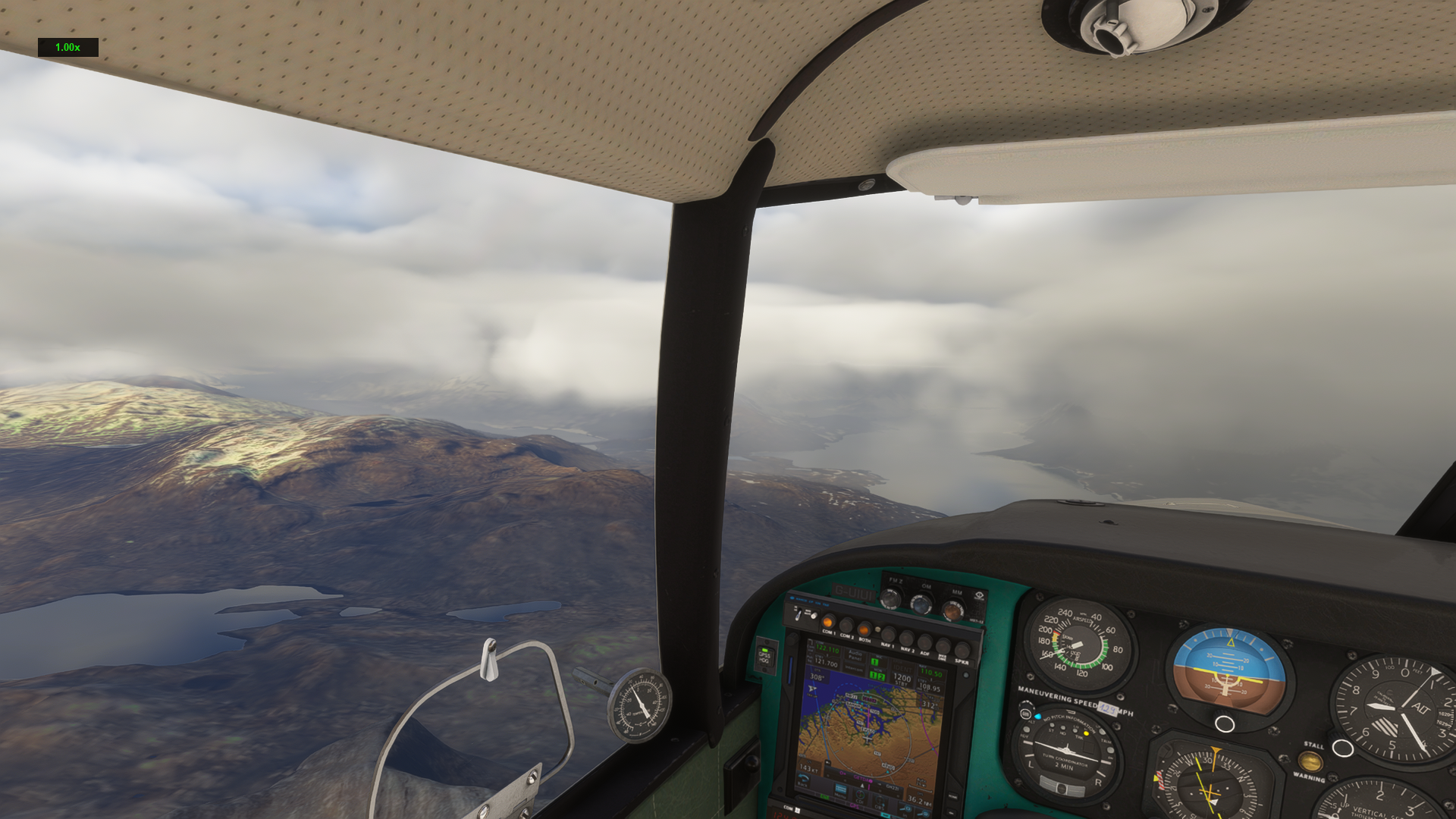
The descent toward Nuuk brought the terrain back into view. The west coast of Greenland is a very different world from the east: less dramatic in raw height, but fractured into a maze of fjords and islands that makes the approach geometry demanding. The weather at BGGH was FEW012, BKN032, OVC040, a 16-knot southerly. Not terrible, but requiring full IMC discipline on the approach.
.png)
Then, unexpectedly, green. Rocky hillsides with actual vegetation, dark water in the fjords, the scattered buildings of Nuuk visible between the inlets. After five legs of white and grey, the colour was disorienting.
.png)
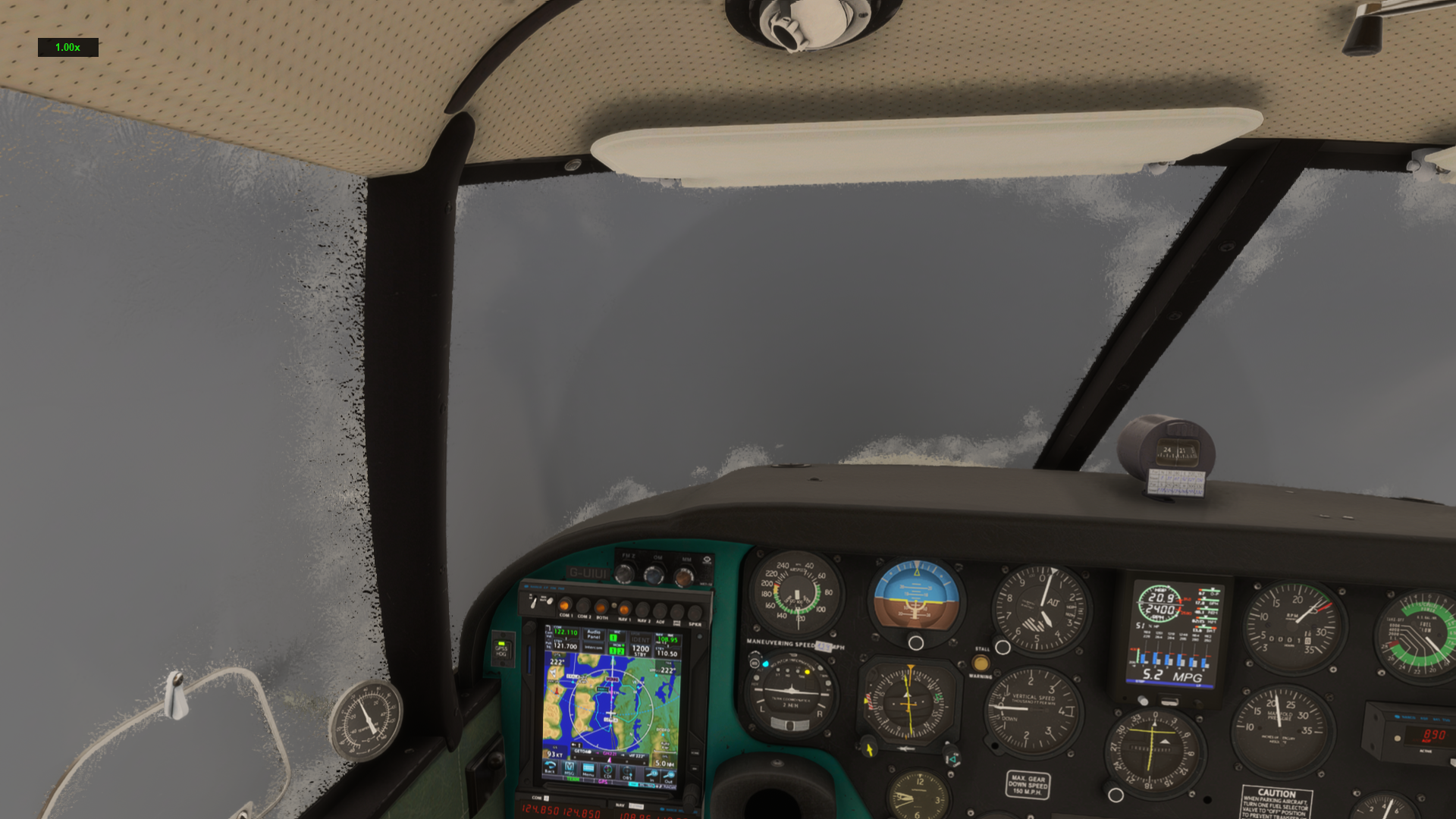
The approach was flown in and out of cloud, moisture streaking the windscreen on final, the runway appearing through ragged lower layers.
.png)
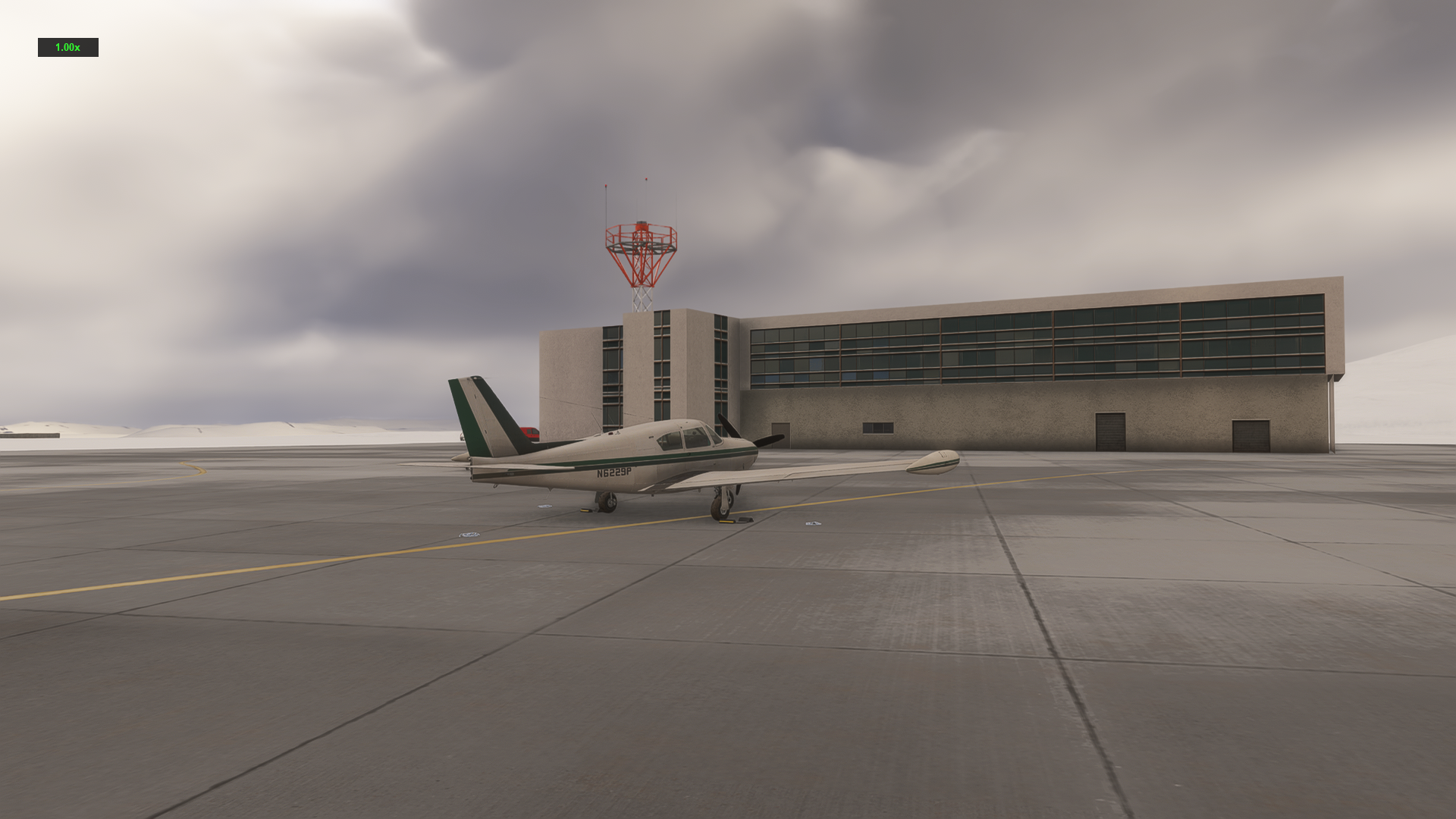
Down on runway 22. Nuuk is the world's smallest capital city by population, around 20,000 people, the administrative centre of Greenland, and one of the least accessible places on the regular GA routing chart. There's a note in the OFP that's worth quoting directly: LIMITED JET-A1 FUEL AVBL. CONTACT BGGH ARO AT +299 38 21 00 FOR INFORMATION AND RESERVATION OF FUEL. Parking on all aprons is also limited. This is not an airport you turn up at unannounced.
.png)
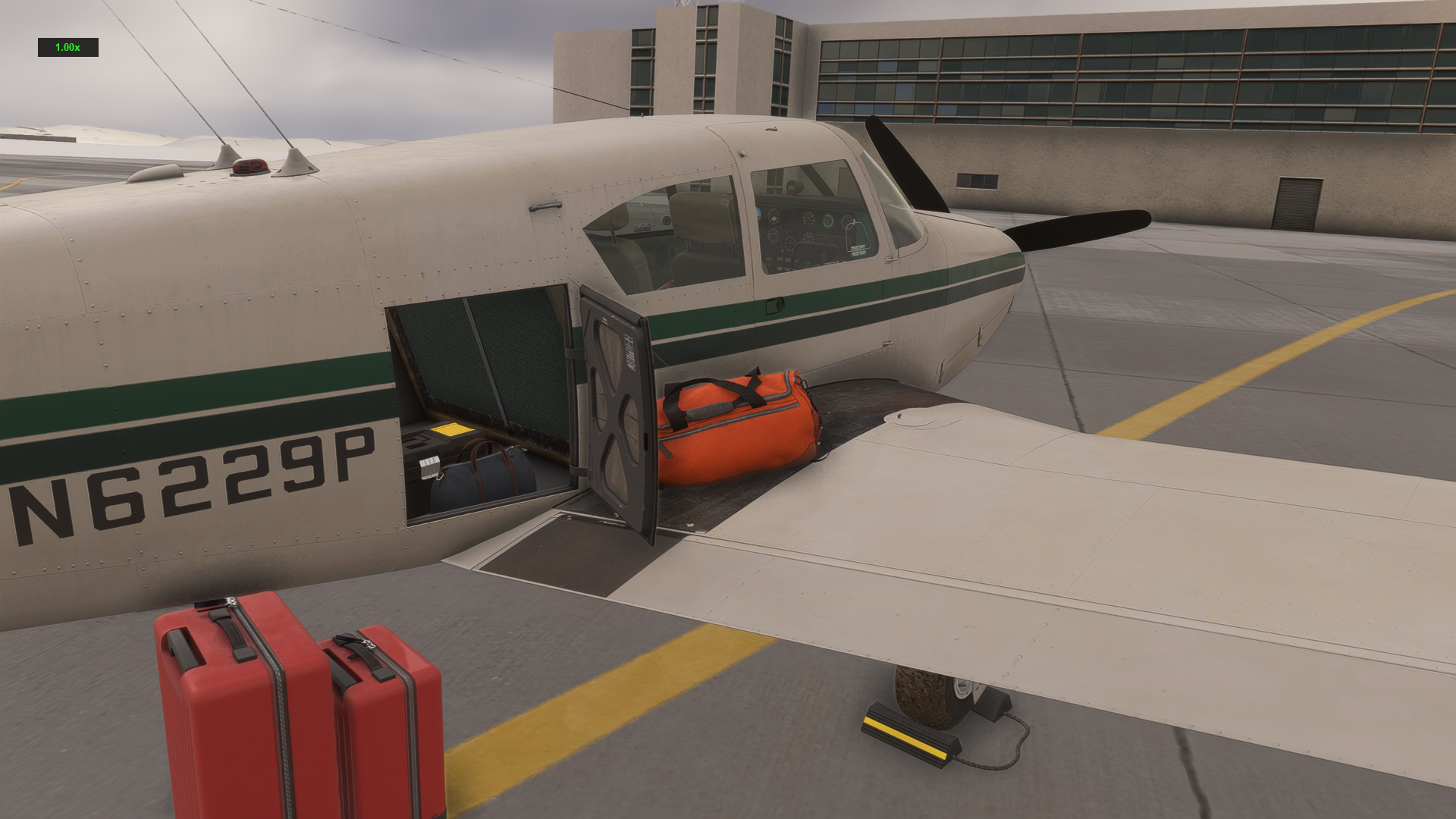
The baggage door was open on the ramp. The orange survival raft was there, as it has been on every leg, tucked in behind the luggage. On a crossing like this it's the piece of equipment you most hope you never need and least want to forget. N6229P, registration clear on the fuselage, standing on a Greenlandic ramp with a red suitcase and an inflatable life raft. That's the reality of this kind of flying, even in a simulator.
.png)
Five legs complete. Greenland crossed.
Block to block: 3h 56m. The headwind added nearly 115 nm of air distance to a 382 nm leg. The Comanche earned its fuel today.
The Journey So Far
| Leg | Route | Dist (nm) | Block Time | Conditions |
|---|---|---|---|---|
| 1 | EGLK → EGPK | 328 | 2h 39m | CAVOK departure, moorland arrival |
| 2 | EGPK → EKVG | 464 | 3h 47m | Headwind, IMC approach, Faroes in the drizzle |
| 3 | EKVG → BIRK | 449 | 3h 25m | Calm, North Atlantic sunrise, OVC arrival |
| 4 | BIRK → BGKK | 419 | 3h 02m | Tailwind, no alternate, Arctic blizzard at Kulusuk |
| 5 | BGKK → BGGH | 382 | 3h 56m | Clear departure, ice cap cruise, M033 headwind |
Total so far: 2,042 nm. Approximately 17 hours block time.
Three legs remaining: Nuuk to Kangerlussuaq, then across to Qikiqtarjuaq, then south to Iqaluit. Canada is close.
Part Three coming once N6229P departs Nuuk.
All flights conducted in Microsoft Flight Simulator 2024. Flight planning via SimBrief. ATC via Say Intentions AI. All IFR, real aircraft performance figures, live weather. Inspired by The Flying Reporter's real-world journey from Blackbush to Oshkosh via the North Atlantic, departing 23rd May in aid of Airaability.
The Piper Comanche 250 (PA-24) is not certified for RVSM airspace or long-range oceanic operations in real-world aviation without modification. This is a simulation.